Introduction
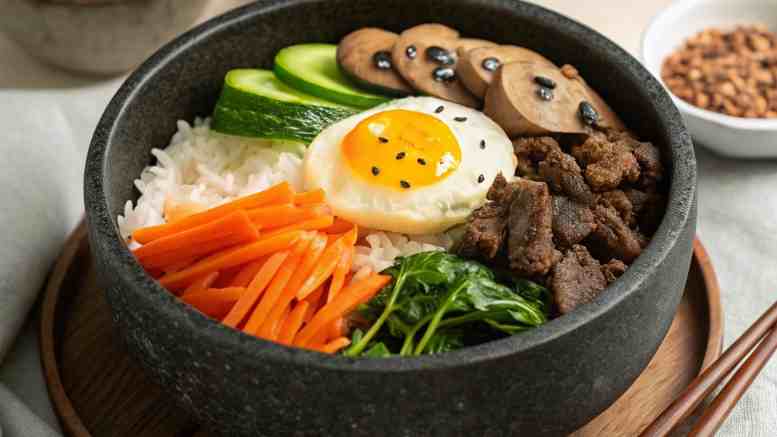
Bibimbap is Korea’s iconic “mixed rice” bowl: warm rice topped with vibrant sautéed vegetables, marinated beef (or tofu), a fried egg, and that signature spicy-sweet gochujang sauce. Customizable, beautiful, and deeply satisfying—this is the dish that makes everyone fall in love with Korean food. Presented in a wide white ceramic bowl with toppings arranged in colorful sections, optionally garnished with sesame seeds and extra gochujang on the side, this Bibimbap offers stunning visual appeal and pure harmony of flavors that turns dinner into a celebration.
Ingredients
For the Bibimbap Base (serves 4): • 4 cups cooked short-grain rice (sushi rice or Korean rice)
• 8 oz beef sirloin or ribeye, thinly sliced (or tofu/mushrooms for vegetarian)
• 4 large eggs
For the Marinated Beef (Bulgogi-Style): • 2 tbsp soy sauce
• 1 tbsp sesame oil
• 1 tbsp brown sugar
• 2 cloves garlic, minced
• 1 tsp grated ginger
• ½ tsp black pepper
For the Vegetables (namul): • 1 large carrot, julienned
• 1 medium zucchini, julienned
• 8 oz spinach, blanched
• 4 oz shiitake mushrooms, sliced
• 1 cup bean sprouts, blanched
• 2 tbsp sesame oil (divided)
• 2 cloves garlic, minced (divided)
• Salt to taste
For the Gochujang Sauce: • 4 tbsp gochujang (Korean red pepper paste)
• 1 tbsp sesame oil
• 1 tbsp soy sauce
• 1 tbsp rice vinegar
• 1 tbsp honey or sugar
• 1 clove garlic, minced
• 1–2 tbsp water (for thinning)
For Serving: • Toasted sesame seeds, kimchi, extra gochujang
Step-by-Step Process
- Cook rice
Prepare short-grain rice (sticky texture is traditional). Keep warm. - Marinate beef
Mix soy sauce, sesame oil, brown sugar, garlic, ginger, and pepper. Add sliced beef; marinate 15–30 minutes. - Prep vegetables
Blanch spinach and bean sprouts separately for 1 minute; shock in ice water. Squeeze dry. Julienne carrots and zucchini. - Sauté vegetables individually
In a small skillet with ½ tsp sesame oil + pinch garlic + salt: sauté carrot 2 min, zucchini 2 min, mushrooms 3 min. Season spinach and sprouts lightly. - Cook beef
In a hot skillet, stir-fry marinated beef 3–4 minutes until caramelized. Remove. - Fry eggs
Fry eggs sunny-side up or over-easy (runny yolk traditional). - Make gochujang sauce
Whisk all sauce ingredients. Adjust heat/sweetness. - Assemble
Divide warm rice into bowls. Arrange vegetables, beef in colorful sections around the edge. Place a fried egg in the center. Drizzle sauce. Sprinkle sesame seeds.
Tips for Perfect Bibimbap
• Cook vegetables separately—keeps colors vibrant and flavors distinct
• Use hot stone bowls (dolsot) if you have them—rice gets crispy bottom (ttadak)
• Gochujang amount is personal—start mild
• Day-old rice works best—less sticky
• Mix everything just before eating—signature “bibimbap.”
• Double sauce—everyone wants extra
Variations and Customization
• Dolsot Bibimbap: Use hot stone bowls for crispy rice
• Vegetarian/Vegan: tofu or mushrooms + extra veggies
• Spicy Fire Bibimbap: double gochujang + fresh chilies
• Seafood: add shrimp or squid
• Kid-Friendly: mild sauce + no spicy veggies
• Luxe: top with seared foie gras or truffle oil
Storage and Serving Tips
• Best assembled fresh—components keep separately
• Fridge components up to 3 days
• Reheat rice/veggies gently; fry a fresh egg
• Quick refresh: new fried egg + extra sauce
• Serve hot rice with cold kimchi contrast
• Perfect with barley tea or soju
Nutritional Information
Based on 4 servings (with beef):
• Calories: 620 kcal
• Protein: 32g
• Total Fat: 22g
• Carbohydrates: 72g
FAQ
1. No gochujang—what can I use?
Sriracha + miso + honey, approximate (not authentic).
2. Can I make ahead?
Yes—prep all components; assemble day-of.
3. Vegetarian version?
Skip beef, add tofu/mushrooms + extra veggies.
4. Best rice?
Short-grain Korean or Japanese—traditional sticky texture.
5. How spicy is it?
Adjustable—gochujang amount controls heat completely.
Conclusion
This Bibimbap is pure Korean harmony—colorful, customizable, and so satisfying you’ll find yourself craving it weekly. One bowl on the table and suddenly dinner feels like a mini vacation, with everyone mixing their perfect bite and asking for the sauce recipe. Keep gochujang and rice stocked, and you’re always 30 minutes away from the bowl that makes ordinary nights feel special and special nights feel legendary.
Bibimbap Recipe: Colorful, Flavorful
Ingredients
- 4 cups cooked short-grain rice
- 8 oz beef sirloin thinly sliced
- Carrot zucchini, spinach, mushrooms, bean sprouts
- 4 eggs
- Gochujang sauce gochujang, sesame oil, soy, honey, garlic
Instructions
- Marinate and cook the beef.
- Sauté each vegetable separately.
- Blanch spinach and sprouts.
- Fry eggs sunny-side up.
- Arrange rice + toppings in a bowl.
- Drizzle sauce; mix before eating.
Notes
• Day-old rice is best
• Freezes components well
• Try tofu or spicy variation
• Pure Korean comfort